What is Infill? Do I need it?
-
What is Infill in Artificial Grass?
What is infill? It is the material brushed between the synthetic blades of artificial grass infill. Most non-spring-back products rely on it to keep the fibres upright after heavy use. Therefore, understanding the options helps you choose the right surface for your garden or sports area.
How Infill Supports the Lawn
Infill performs a mechanical role. It braces the blades so they spring back after foot traffic or pressure. Without it, many standard grasses flatten permanently and look worn. Additionally, a layer of infill gives the surface a firmer, more natural feel underfoot because it mimics some of the cushioning of real soil. For pet owners, certain infills also help manage heat and moisture on warm days.
Common Types of Infill
Sand remains the most widely used option. It is cheap and easy to source. However, its angular shape can wear the fibres over time. Sand also holds moisture, which creates a place for bacteria if pets use the area.
Zeolite offers a different approach. This volcanic mineral is non-toxic and absorbs moisture and odours. It crystallises pet waste on contact, then releases the residue when rain or a hose washes the surface. Zeolite works best with permeable polyurethane backings such as those on specialised pet products. As a result, many owners of dogs or small animals prefer it over plain sand.
Applying and Maintaining Infill
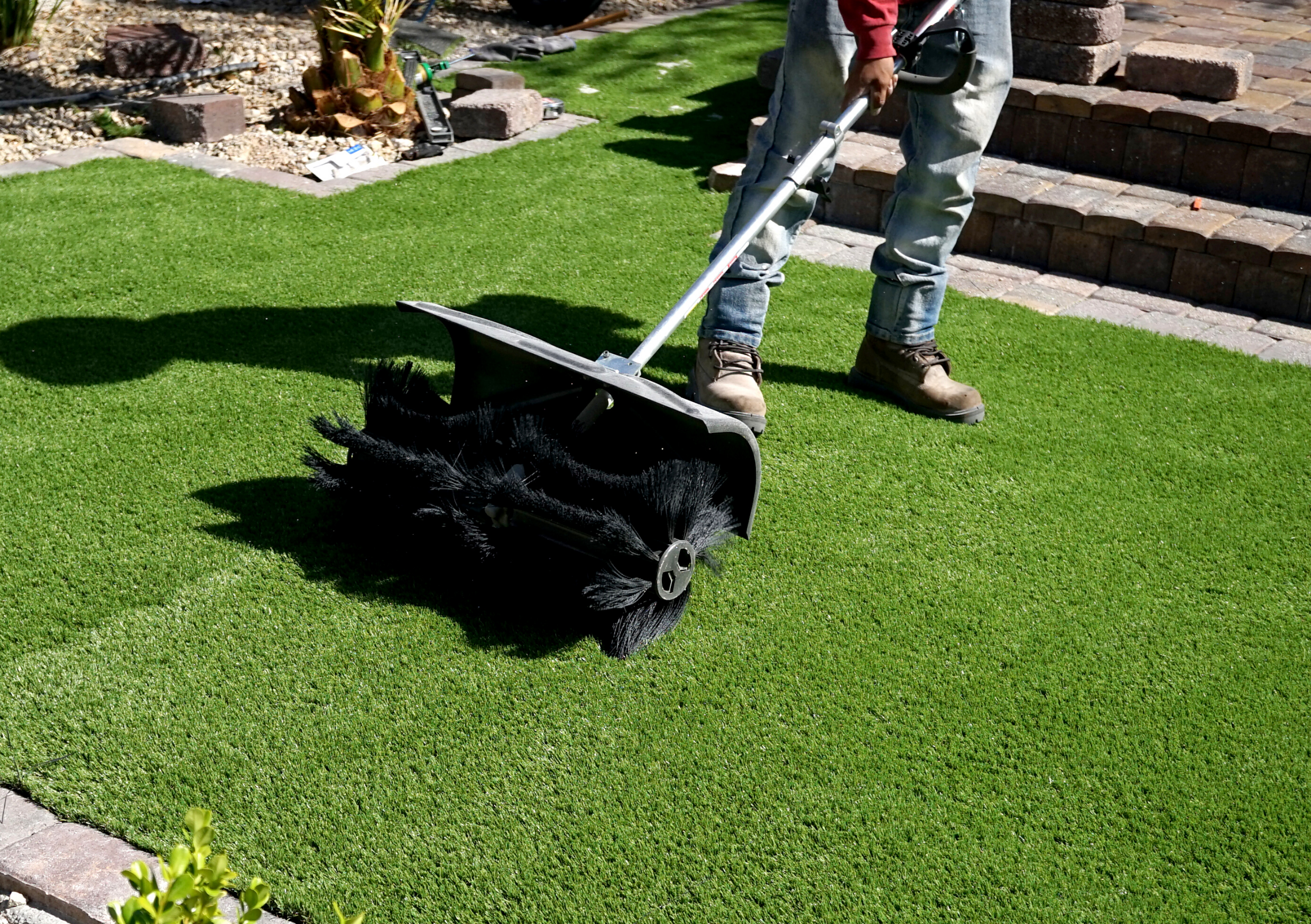
Spread the material evenly with a drop spreader for consistent coverage. Then brush it deep into the pile with a stiff turf broom or mechanical brush. Work in several directions so the infill settles fully between the blades.
Check the level a few times a year. High-traffic zones may need a light top-up. Brush the lawn regularly to redistribute the material and lift flattened fibres. For detailed brushing advice see our guide on how to brush artificial grass.
Spring-back grasses often need little or no infill because their yarn construction already returns the blades to an upright position. Ask your installer which style suits your expected use. Clear written details on materials and aftercare appear in the advice on your artificial grass installers.
-
Extra Considerations
Good drainage still depends mainly on the sub-base and backing rather than the infill alone. Excess sand can sometimes slow water movement, while zeolite usually allows freer drainage. Clean pet areas promptly and top up absorbent infill as needed to control smells. If odours or uneven surfaces develop, review the steps in our page on artificial grass issues.
Choosing the correct infill at installation reduces later maintenance. It also protects the appearance and lifespan of the lawn. Contact the team if you need samples or advice on the best combination for your project.